Filling technology guide
Counter-pressure vs gravity filling for carbonated drinks.
Understand why fizzy drinks normally need pressure-balanced filling rather than standard still-liquid filling methods.
Technology comparison
Why standard liquid filling is not enough for fizzy products.
| Gravity / standard liquid filling | Best for still or low-foam products where the liquid does not need pressure to retain quality. |
|---|---|
| Counter-pressure / isobaric filling | Best for carbonated products where the container is pressurised before filling. |
| Main risk with the wrong method | Foam, inconsistent fill levels, product loss, oxygen pickup and poor carbonation retention. |
| Best next step | Send product, carbonation, temperature, container and closure details before selecting a machine. |
Process
Counter-pressure filling in practical steps.
- Prepare the container.The bottle or can is positioned and sealed against the filling head.
- Purge or pressurise.CO₂ is used to prepare the container and create pressure balance.
- Open the product path.The drink flows under controlled pressure rather than open atmosphere.
- Vent and finish the fill.Gas is vented in a controlled way so liquid can enter cleanly.
- Close the pack.Capping or seaming follows promptly to protect carbonation.
Common searches
Carbonated filling terms customers often compare.
Next steps
Continue comparing carbonated filling options.
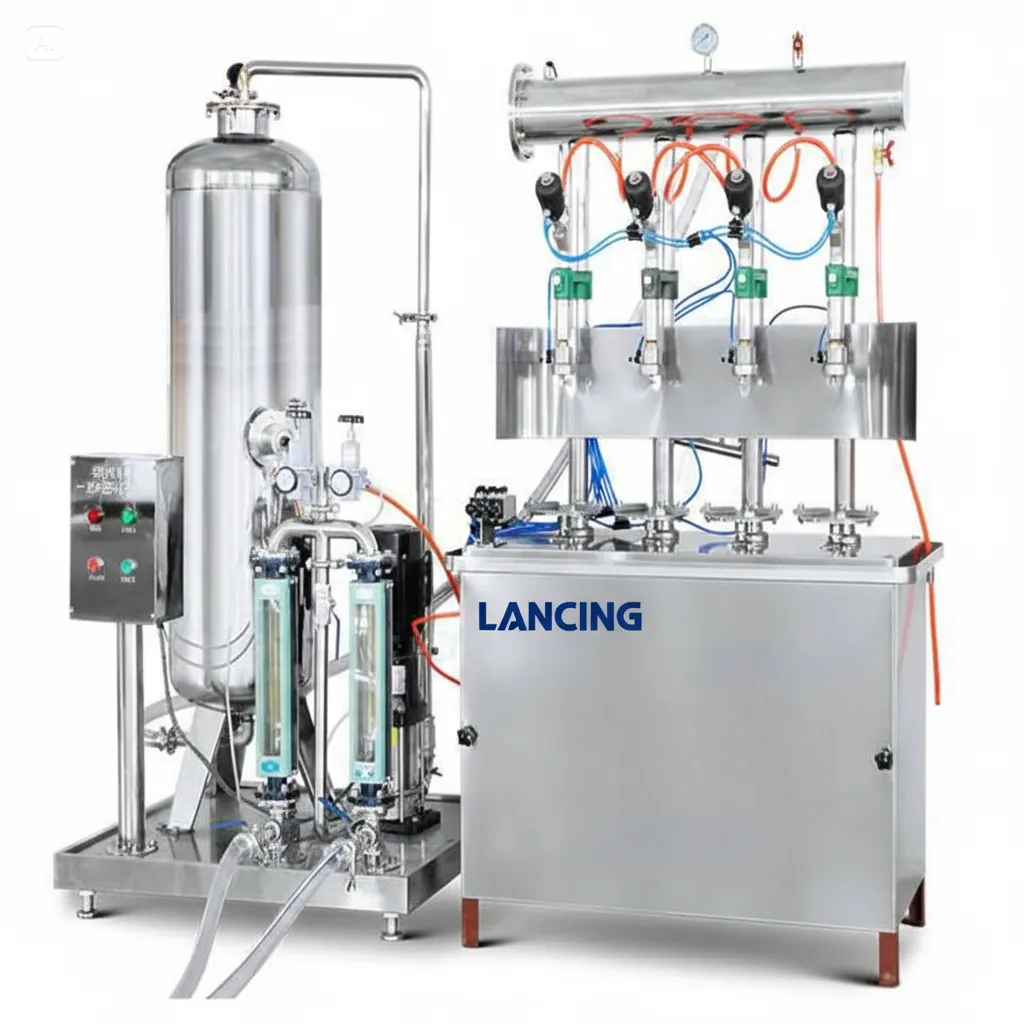
Start with a practical shortlist
Not sure which filling method you need?
Send the drink, carbonation, container and closure details and ask for a practical filling-method recommendation.
Carbonated filler FAQs
Questions buyers ask before specifying a machine.
Can carbonated drinks be filled with a gravity filler?
For commercial carbonated drink packaging, gravity filling is usually not the preferred route because foam and CO₂ loss become difficult to control. Counter-pressure or isobaric filling is normally reviewed first.
Is counter-pressure filling only for beer?
No. It is used across carbonated beverages such as beer, cider, soda, sparkling water, sparkling wine-style products and RTDs where CO₂ retention matters.
What does isobaric mean in filling?
In this context it means filling with balanced pressure between the product path and the container so the drink can be transferred with less foaming.
Comparison evidence
Use the comparison to decide what must be measured.
The practical difference between gravity and counter-pressure filling is not only the valve name. It is the ability to prepare the container, manage pressure during fill and close the package quickly enough to protect the drink.
| Container preparation | Counter-pressure routes can purge or pressurise the container before filling; gravity routes generally do not offer the same pressure control. |
|---|---|
| Foam control | Counter-pressure filling is normally chosen where foam would otherwise limit speed, fill level or presentation. |
| CO₂ retention | Pressure-balanced filling helps retain carbonation, but real performance still depends on product temperature, carbonation level and closure timing. |
| Oxygen caveat | CO₂ purge can help reduce oxygen pickup, but dissolved oxygen and TPO must be measured with agreed sampling if they matter to shelf life. |