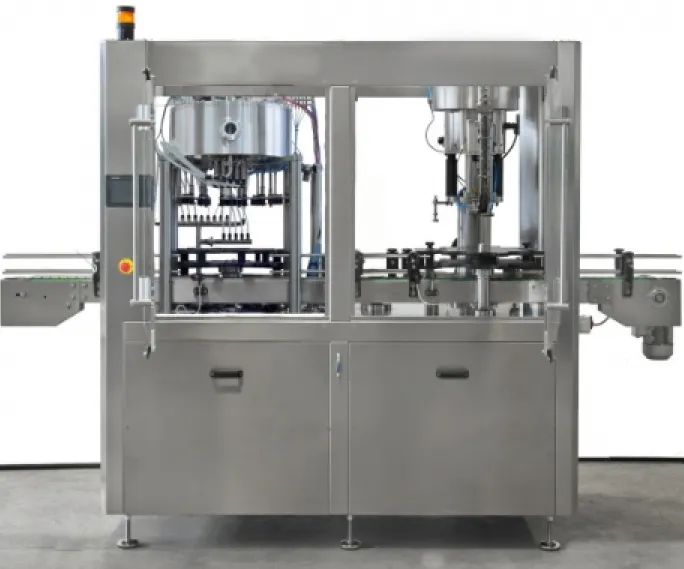
Semi-automatic carbonated can filler
Semi Automatic Isobaric Filling Machine.
A compact four-head counter-pressure can filler route for soda, sparkling drinks and RTD cocktails in small-to-mid scale production.
Product fit
Compact carbonated filling without moving straight to a full automatic line.
This route suits beverage teams who need controlled carbonated filling but still want a compact footprint, practical operator control and manageable changeover planning.
- Four filling heads with sealed counter-pressure operation
- Integrated mixing and carbonation module
- CO₂ and air pressure controls
- Custom can moulds for agreed formats
- Suitable for pilot runs, craft production and small-to-mid scale beverage output
Applications
Good fit where carbonated product development and manageable production matter.
Craft soft drinks
Short production runs where flavour range and changeover flexibility matter.
Seltzer and soda
Carbonated water-based drinks where foam control and fill presentation are central.
RTD cocktails
Small-to-mid scale pressurised cans where operators need practical pressure control.
Specification advice
Confirm the real drink and can before choosing the final setup.
Published capacities are only a starting point. Final performance depends on product temperature, carbonation level, can size, operator rhythm, utilities and the way filled cans move into the closure or seaming stage.
- Send filled and empty can samples where possible
- Confirm can size range and changeover frequency
- State desired cans per hour and production shifts
- Share product temperature, carbonation and any foaming concerns
Next steps
Continue comparing carbonated filling options.
Start with a practical shortlist
Ask about the compact carbonated can filler
Include your can size, drink type, target output and whether you need filling only or help with downstream seaming, labelling or packing.
Carbonated filler FAQs
Questions buyers ask before specifying a machine.
What containers does the semi-automatic isobaric filler suit?
The compact route is designed around carbonated drinks in cans, with common formats such as 330 ml and 500 ml handled by appropriate tooling or moulds.
What output should I expect?
The compact four-head route is typically specified at approximately 240–400 cans per hour, with real output depending on beverage behaviour, container size and setup.
Does it include carbonation control?
The compact machine route includes an integrated mixer/carbonation unit with CO₂ and air controls, so the beverage preparation and filling route can be considered together.
Verified compact-route data
Use the published figures as a starting point, then confirm with product trials.
The semi-automatic route is the clearest place to publish specific machine data because first-party Lancing product information lists the compact carbonated can-filling specification. Those figures should still be treated as application-dependent: carbonated beverage behaviour changes with temperature, carbonation, can size and operator handling.
| Filling heads | 4 filling heads, based on the published compact isobaric can filler route. |
|---|---|
| Approximate output | 240–400 cans/hour, dependent on beverage, can size and setup. |
| Common cans | 330–500 ml cans are listed as typical; other formats need tooling and sample review. |
| Product temperature | Published guidance references chilled filling around 1–4 °C, with outlet temperature under 6 °C for the mixer route. |
| Pressure references | Typical CO₂ control around 0.2–0.3 MPa and air supply around 0.5–0.7 MPa are published for the compact route; site-specific settings must be confirmed safely. |
| CO₂ quality | Use beverage-grade CO₂ and confirm the required purity, supply stability and safety arrangements before commissioning. |
For the underlying product page, see the first-party Lancing Liquid Fillers semi-automatic isobaric filling machine specification.
